Near synonyms are words that have similar meanings but are not necessarily used interchangeably. For example, verbs quake, shiver, shudder, tremble, shake and vibrate are all near synonyms but are used differently syntactically, particularly in terms of transitivity and the types of nouns that are used as subjects (Atkins & Levin, 1995). Research has shown that the use of near synonyms is a problematic area for L2 learners (Liu & Zhong, 2016), especially considering vocabulary depth (Nation, 2001). However, dictionaries oftentimes overlook these nuanced differences of use of near synonyms and use near synonyms in providing definitions by making references to one another. As a result, L2 learners are often left with an abstract and vague understanding of the word usage. A corpus can fill this gap by providing L2 learners with multiple examples of how words can be used and make them more aware of the idea of co-text.
The goal of this activity is to help L2 learners differentiate between near synonyms (with the example of significant and important) by raising their awareness about the co-text that near synonyms occur in using the Crow corpus.
This activity would be helpful to use when revising drafts to increase learners’ lexical diversity by using near synonyms.
First, look at the definitions of the near synonyms significant and important from the Webster dictionary below. Note how the definition of “significant” uses “important” and the definition of “important” uses “significant.” What’s the difference, then?
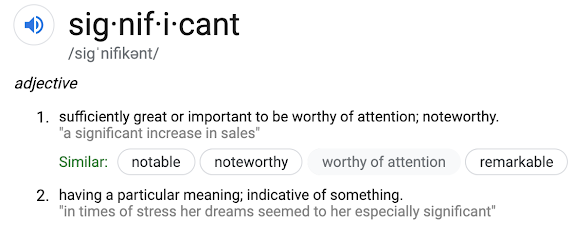
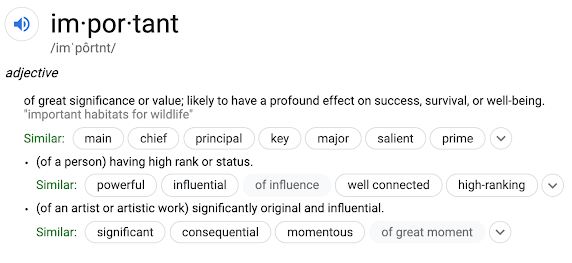
Click for the Google search definition of significant.
Click for the Google search definition of important.
And now look at the examples of these adjectives from the Crow corpus. Let’s start with the word significant:
Here’s the link to the corpus with the “significant” search.
- What nouns do you notice after significant?
- Hint: Click on “Sort by the word after” to help you answer.
- Is significant always followed by a noun?
Now let’s look at the examples of the word important:
Here’s the link to the corpus with the “important” search.
- What nouns do you notice after important?
- Hint: Click on “Sort by the word after” to help you answer.
- Is important always followed by a noun?
- Now that you’ve looked at both adjectives, what similarities and differences do you notice about the nouns that follow important and significant?
- What other similarities and differences do you notice when important and significant are not followed by nouns?