
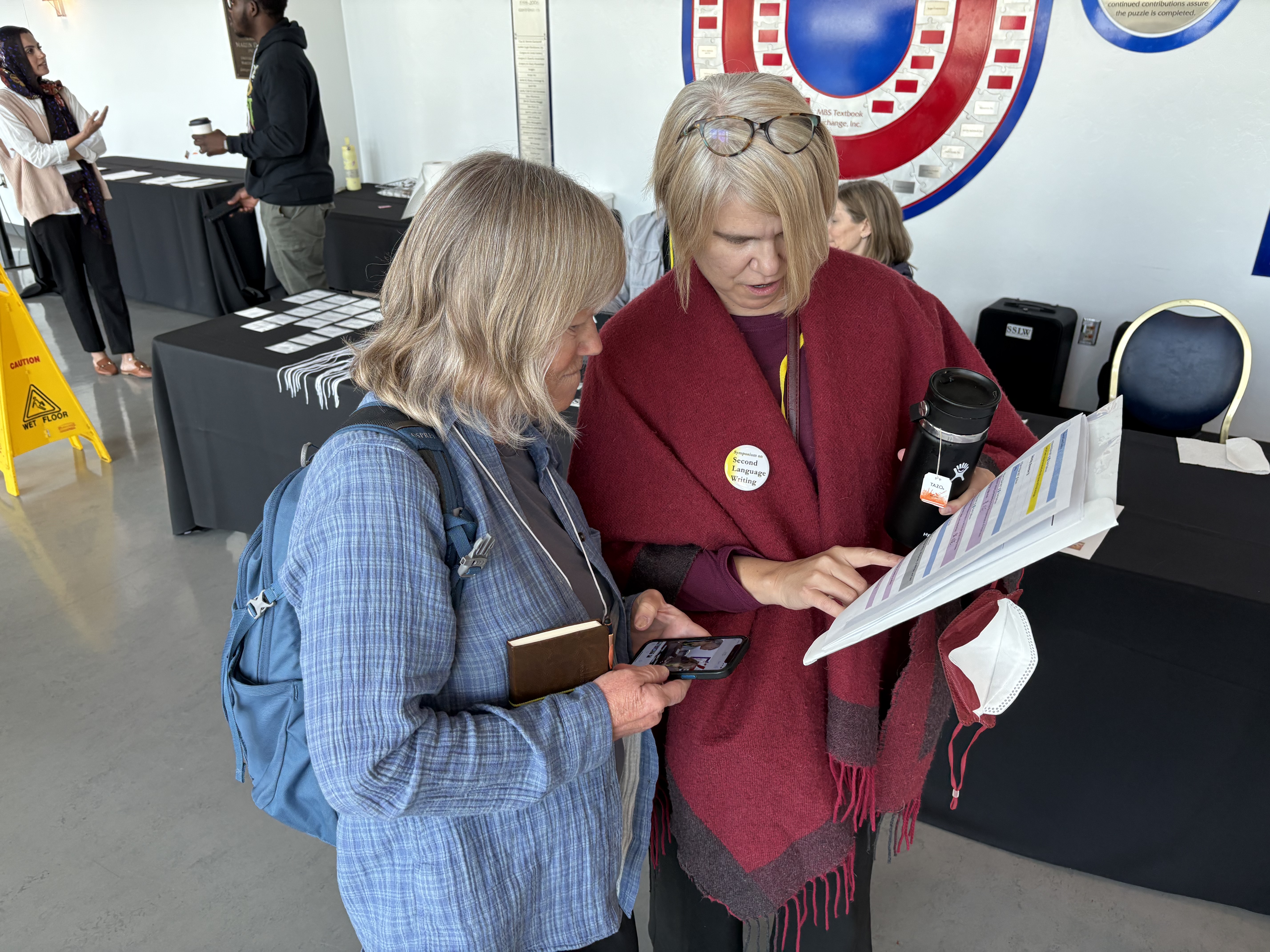
Earlier this year, when spring was in full bloom, Dr. Shelley Staples (The University of Arizona) helped run a Crow workshop at Cascadia College. Its campus, which sits just outside the Seattle area in Washington, hosted the workshop online. Through the gracious funding from the National Council of Teachers of English’s Conference on College Composition and Communication (CCCC) Research Initiative, Dr. Staples, Dr. Randi Reppen (Professor Emerita, Northern Arizona University), and Robyn Ferret (Tenured Faculty, Cascadia College) helped bring this project to fruition. Its fruit is ripe and ready to be explored next year at the CCCC Conference.
Before looking to the future, we must take a moment to praise the dedication of the educators who worked to make this a reality. Robyn Ferret, who has taught at the college since 2000, was also part of the 2022 Crow Fellows program, which trains teachers using the Crow corpus, composed of mainly undergraduate writing samples, and focuses on writing skills like language and rhetorical word choices. This experience bled into her work at Cascadia, especially when it came to bringing this workshop to the university.
Broken into two sessions, to make things more digestible, the workshop hosted five new teachers. The first session focused on an introduction. Ferret presented on her projects of the past, what she was able to do, and how she got there to add context to the capabilities of the corpus and how it can shape pedagogical practices. The second session allowed for participants to take a more hands-on approach and play around with the corpus. They were then encouraged to ask questions, share thoughts, and adopt what they learned into their pedagogy. Many teachers already engage in these practices, but this workshop helped to flesh these ideas out, establish cohesive understanding, and provide support.
The workshop itself prioritized genre-based pedagogy, focusing on genres that aren’t as represented outside of the first year writing context. This means digging deeper and asking fundamental questions like: What makes a genre? What is the purpose of writing? Who is the audience? What’s the author’s position? These reflections begin to uncover the purpose behind writing and what drives language. There is no such thing as writing in a vacuum, with social influence comes intention. Dr. Staples firmly believes there is much to learn from students, which is why samples were gathered from first-year writing students. Looking at their larger sequences of texts, and the different functions of language, patterns begin to emerge. These insights are crucial in helping to strengthen student’s writing while still preserving diversity and creativity.
The practices born from, and discussed, during the workshop will be presented on by Dr. Staples at the CCCC conference in Spring 2026. Teacher participants, who were compensated for their time, also have the opportunity to speak at the conference. Whether they come in-person or through recording, the heart of the workshop will make itself known through their words. These pedagogical materials are supposed to be sustainable. To trickle down and fertilize classrooms for generations, allowing students to walk away with a piece of these practices that resonates with them, letting it mold in their hands. Prioritizing longevity provides a space for education to grow, evolve, and prosper.
There’s a togetherness built into the way Dr. Staples, and her colleagues, handle themselves. Their collaborative process ensures that everyone has a voice. Dr. Staples, as well as Crow, establish that through pedagogy and writing, connection and understanding is built to last.
One response to “Dr. Shelley Staples Travels to Washington (Virtually)”
[…] Dr. Shelley Staples Travels to Washington Virtually […]