
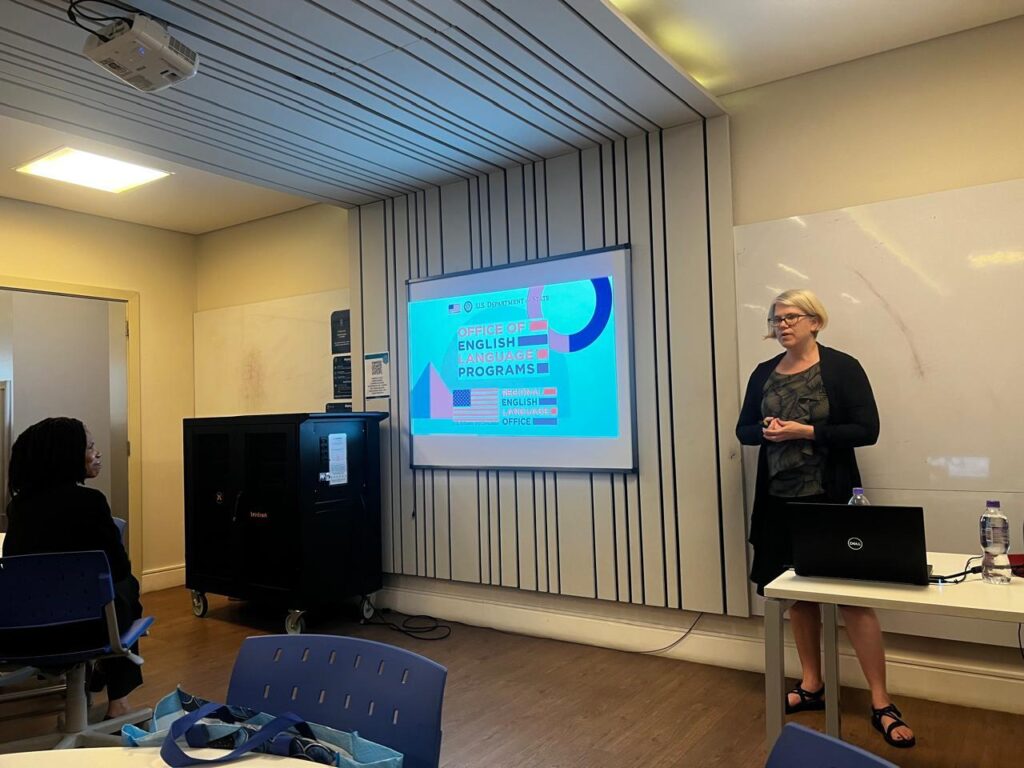
Instead of silence, language fills the air. Words upon words topple out of people’s mouths in an attempt to reach out. A way to overcome distance, slowly bridging the gap between culture and identity to grow and deepen understanding. It’s this idea that fuels the Regional English Language Office (RELO) programs, funded by the US Department of State, to create sustainable and mutually beneficial connections across borders using the English language.
Last year, Dr. Shelley Staples spent almost three weeks in Brazil visiting three Federal Universities: Universidade Federal de Minas Gerais (UFMG), Universidade Federal Do Rio Grande Do Sul (UFRGS), and Pontifícia Universidade Católica de São Paulo (PUC-SP). While there, she gave talks on teacher training tools with corpora, including Crow, and what has been learned from the implementation of these practices. This base information included an introduction into Crow and our priorities and goals, providing a seed of insight into how the corpus and repository works, its many capabilities and uses, as well as the accessibility it grants.
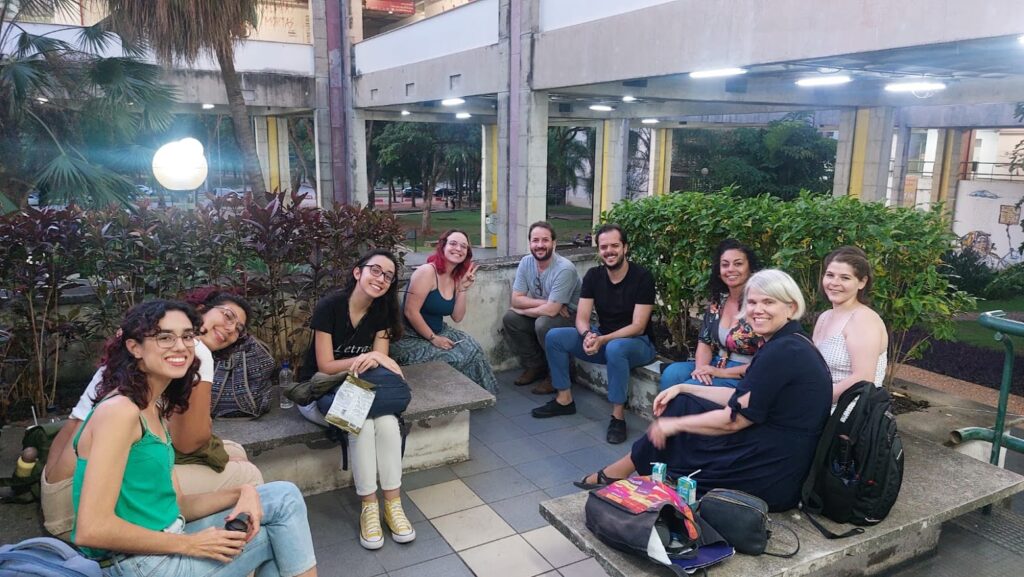
There was a specific focus on word lists, including key words across disciplines to provide useful insights for pedagogy. Through facilitating curriculum development and corpus training something begins to bloom. The language and learning element that results begins to truly strengthen and develop. It prompts questions that are inherently designed to improve pedagogy. Thinking about student needs as well as academic work through the English language helps sharpen the focus. The word lists collected and assembled help forge connections across and within disciplines while also encouraging engagement.
The teacher training workshop series lasted three to four days at each institution. Intended for former, current, and future teachers it was a chance to explore new ways of approaching learning. Attendees were also given course credit, through the institution as both an incentive and a way to acknowledge their time. Their activity was to work closely in groups, using this collaborative opportunity to meet with other educators, as many were from different places, their paths hadn’t really crossed until now. Dividing themselves based on their pedagogical interests allowed for the second phase to take effect: crafting a lesson plan. Utilising the Crow corpus or other corpus tools, finding the necessary resources with their goal in mind, they got to work. Whether it was aimed at the legal uses of English or structuring something for elementary school, they were encouraged to brainstorm and discuss. After trial and error, receiving guiding feedback, the groups were expected to present on the last day.
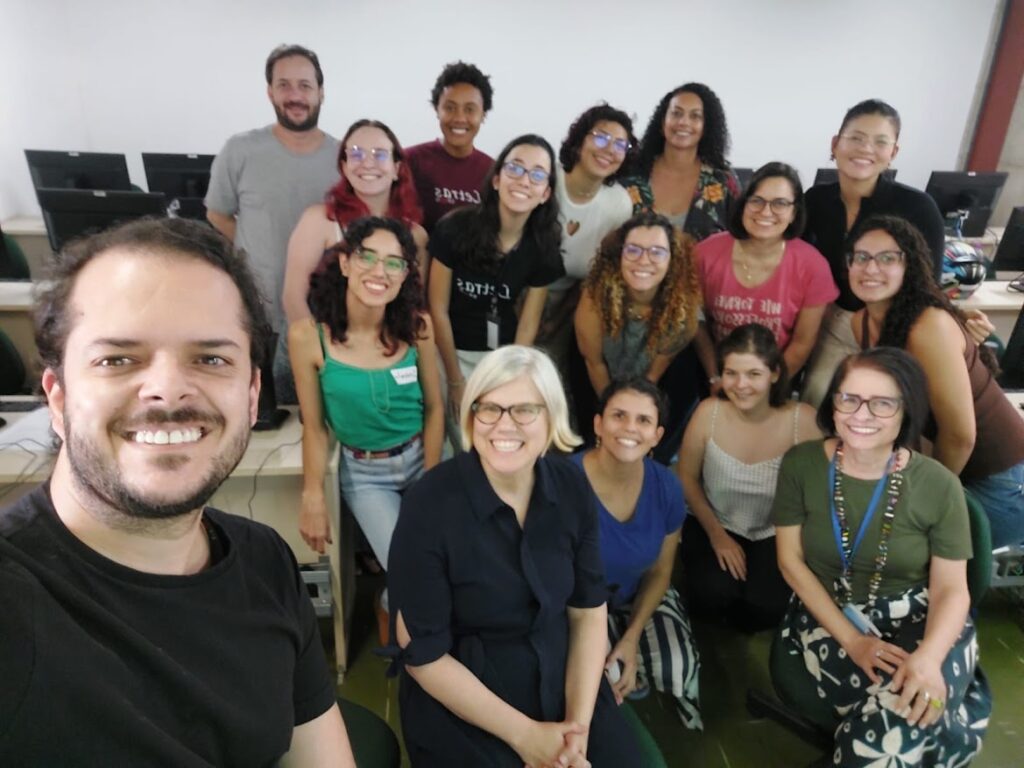
As remarkable of an experience as this was, there is one crucial element that has yet to be named: the Regional English Language Officers (RELOs) who accompanied Dr. Staples during the training sessions. Helmara F.R. de Moraes, Ph.D (RELO Deputy Director) and Scott Chiverton (RELO Director), as well as her hosts Dr. Deise Dutra (UFMG), Dr. Ana Bocorny (URGS), and Dr. Tony Berber-Sardinha (PUC-São Paulo). Their expertise and insight allowed for everything to move as smoothly as possible. Their dedication creates a ripple effect, furthering the progress made in establishing collaborative and sustainable communicative practices. This work goes beyond one person or country, as connection knows no bounds.
One response to “Dr. Shelley Staples takes Crow to Brazil”
[…] Dr. Shelley Staples takes Crow to Brazil […]